
A Nova SBE study reinforces the impact of community pharmacies on the country’s health and economy
The “The Value of the Pharmacy Network in Portugal” study was presented today at the 15th National Congress of Pharmacies.
By Ana Rita Cunha
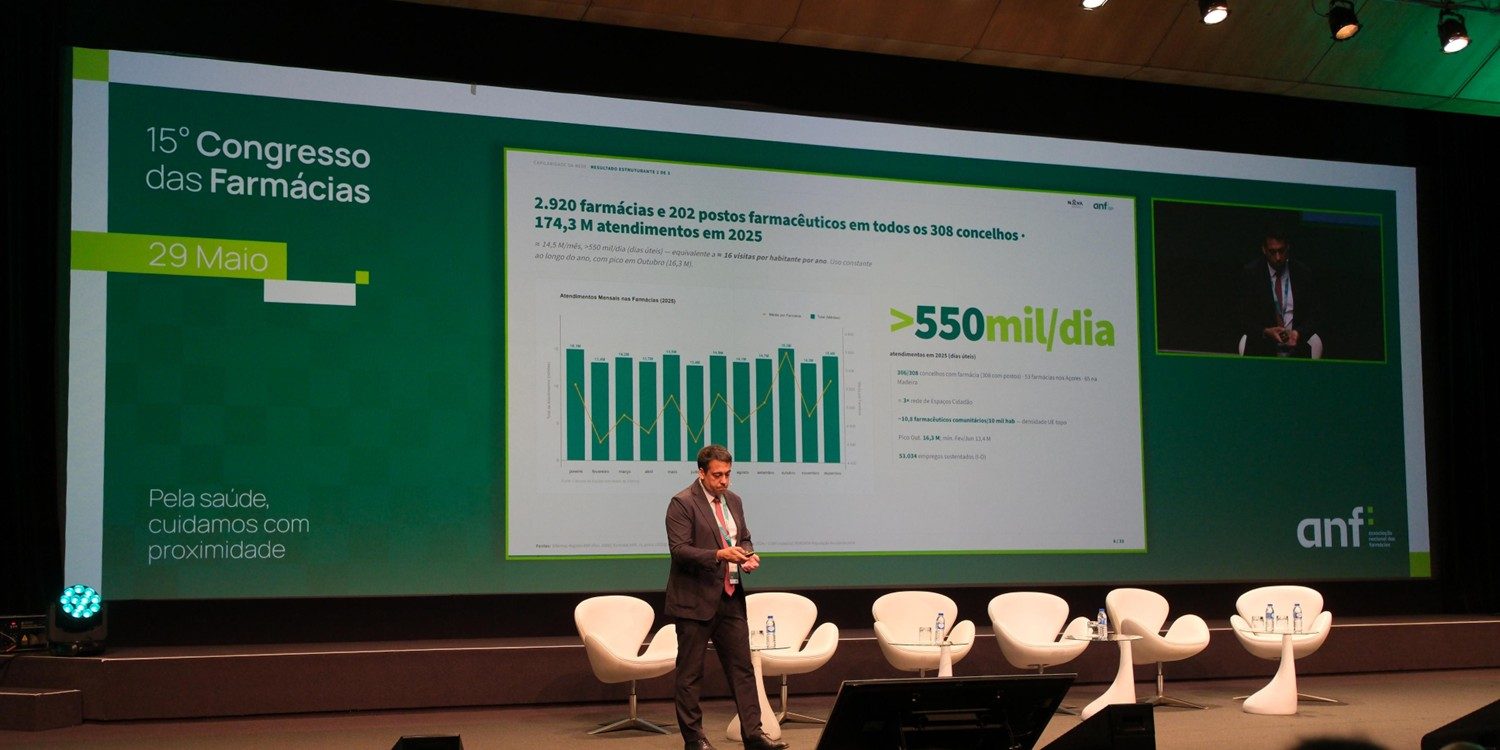
The network of community pharmacies in Portugal plays a central role in people’s access to healthcare and makes a significant contribution to the National Health Service (SNS) and to the country’s economy. This is the main conclusion of the “The Value of the Pharmacy Network in Portugal” study, developed by Nova SBE and presented today at the 15th National Congress of Pharmacies.
According to the study, coordinated by researchers Pedro Brinca and João Duarte, 82% of the population lives within five kilometres of a pharmacy and 41% can reach one on foot. This proximity extends across the entire territory, including rural areas. From any point in the country, the average travel time to a pharmacy ranges between 7 and 11 minutes, whereas access to a hospital may involve journeys exceeding 40 minutes.
“Pharmacies leave no one behind. They are present in all 308 municipalities and represent the most widespread point of what is, in effect, a public service,” highlighted researcher Pedro Brinca during the study’s presentation.
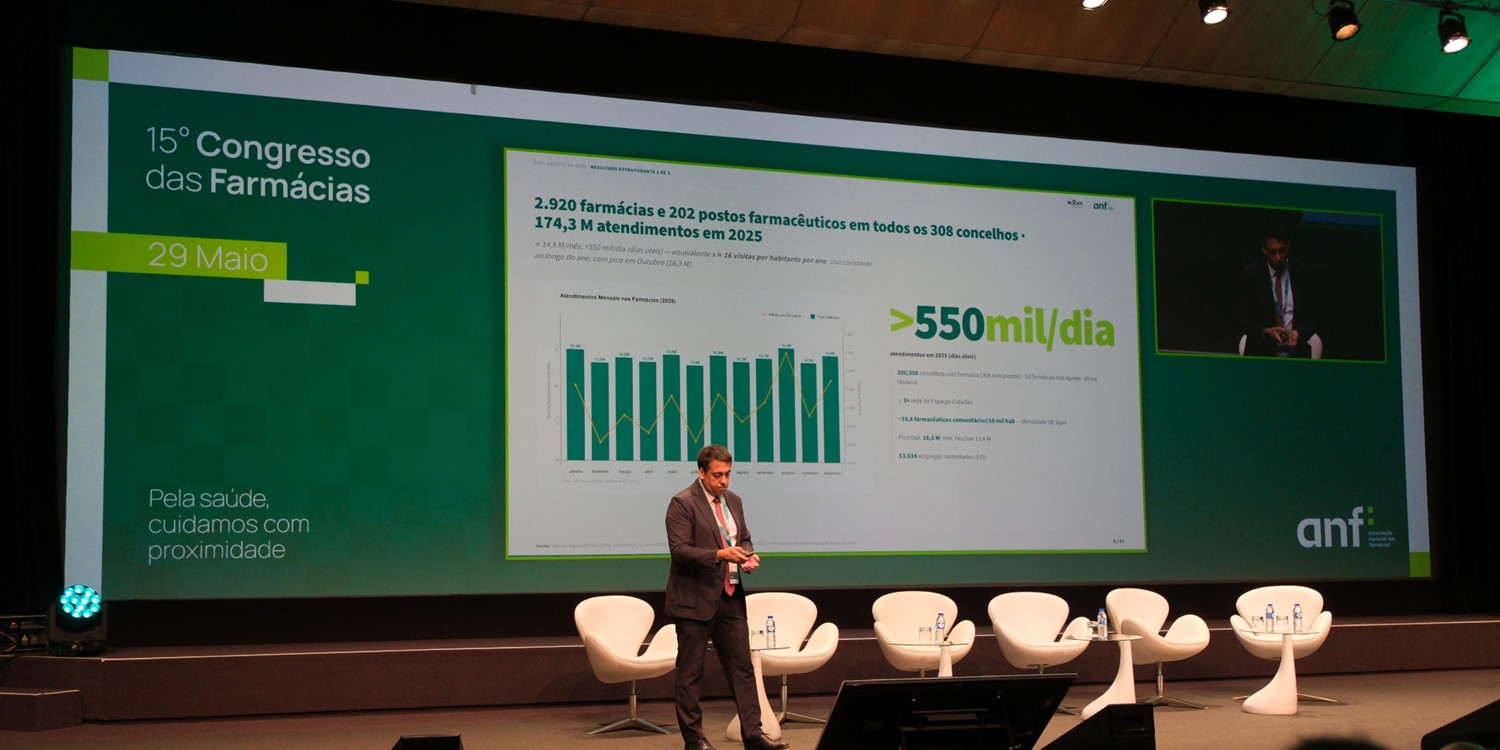
In addition, the pharmacy network has, on average, four pharmacists per establishment, a figure significantly higher than the European Union average of 2.6 professionals per pharmacy. In 2025, Portuguese pharmacies carried out 174.3 million consultations, equivalent to more than 550,000 per working day.


The close and trusted relationship with the population is also reflected in customer loyalty: 68.4% of citizens report always using the same pharmacy, and the majority express high or complete levels of trust in its professionals.
The study further shows that, when faced with minor symptoms, 57.2% of Portuguese people choose the pharmacy as their first point of contact with the healthcare system, while only 16.5% initially turn to a primary care centre. Around 98% of these cases are resolved immediately at the pharmacy, avoiding the need to visit a health centre or hospital.
Beyond its impact on public health, the pharmacy network plays a significant role in the national economy and in territorial cohesion. According to the research, the sector accounts for 1.12% of GDP and provides 53,000 jobs. “We constantly hear about the strategic importance of Autoeuropa Factory for the country, yet the national pharmacy network has a comparable turnover, with two advantages: it employs far more people and plays a much greater role in territorial cohesion,” said Pedro Brinca.
The activity of pharmacies has also contributed to the sustainability of public finances, reducing SNS expenditure and returning 7.8% of the SNS budget to the State in tax revenue.
Consult the executive summary of the study here.


About the autor